
Disclaimer: This post may have affiliate links. As an Amazon Associate, I earn from qualifying purchases.
Why Your Habits Are Your Destiny And How to Rewire Them
Aristotle said it two thousand years ago: "We are what we repeatedly do. Excellence, then, is not an act but a habit."
He was right. And modern neuroscience has finally caught up to explain why.
Your habits aren't just things you do. They're the architecture of your identity. Every repeated action strengthens a neural pathway, making it easier and more automatic the next time. Over weeks and months, those pathways become the default routes your brain follows shaping not just your behavior, but your character, your health, your relationships, and your future.
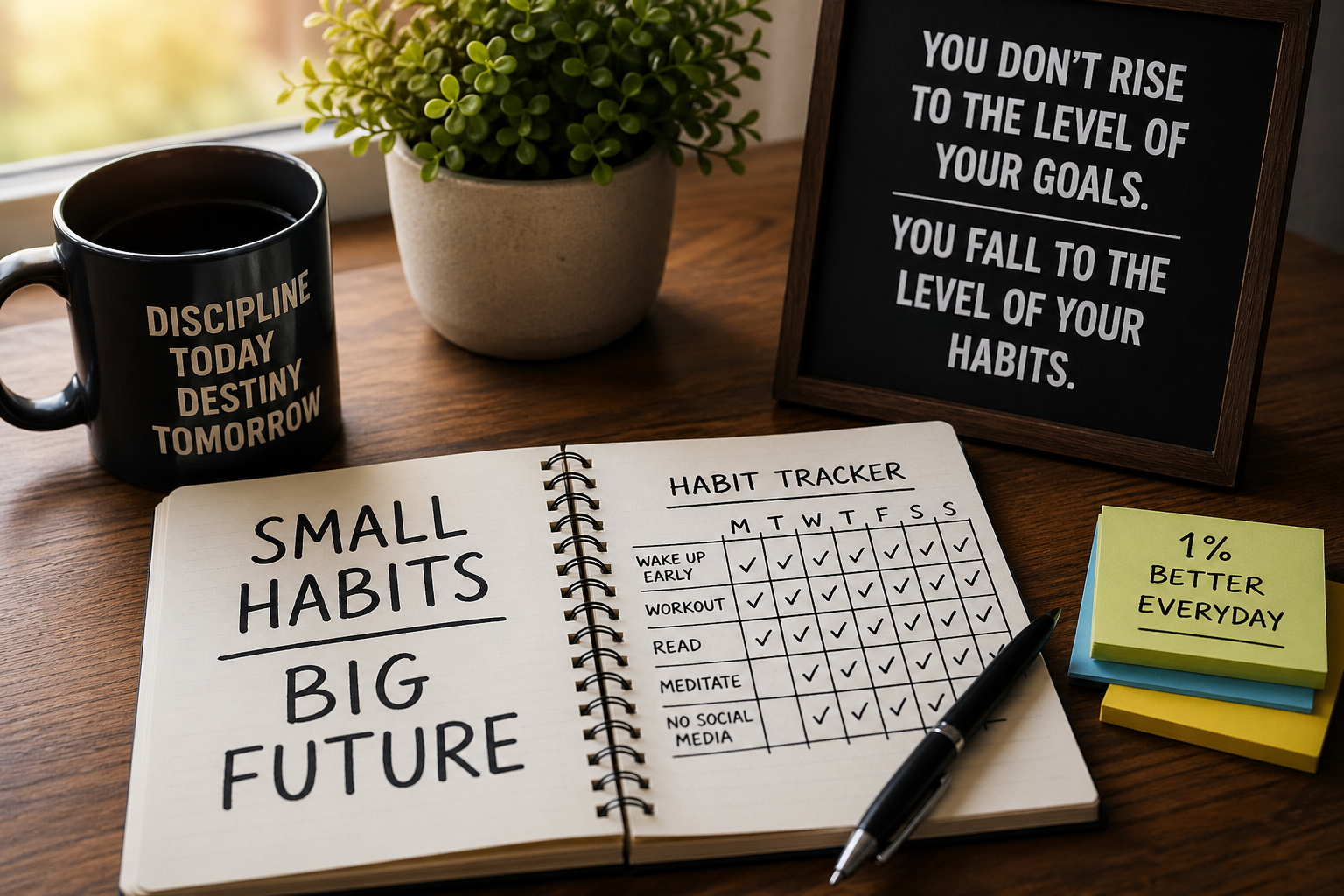
The uncomfortable truth is this: you don't rise to the level of your goals. You fall to the level of your habits.
Why Bad Habits Are Easy and Good Habits Are Hard
There's a reason you can binge a streaming series for four hours without effort but struggle to meditate for ten minutes. Your brain is an efficiency machine. It gravitates toward behaviors that require the least energy and deliver the fastest reward.
Bad habits almost always offer instant gratification. The scroll through social media. The sugary snack. The decision to skip the workout. Each one delivers a small, immediate dopamine hit that your brain learns to crave.
Good habits, by contrast, tend to deliver delayed rewards. The benefits of exercise show up in weeks, not minutes. The returns on reading, learning, or saving money compound slowly. Your brain has to trust a future payoff it can't yet feel and that requires something most people underestimate: discipline as a bridge to desire.
You don't have to love the habit. You just have to do it long enough that the results create their own motivation.
The 66-Day Reality
The popular claim that it takes 21 days to form a habit comes from a 1960s observation by a plastic surgeon not from rigorous research. The actual science, published in the European Journal of Social Psychology, found that it takes an average of 66 days for a new behavior to become automatic. And for some habits, it took over 250 days.
This matters because most people quit too early. They try a new routine for two or three weeks, don't feel it becoming "natural," and conclude it doesn't work. But the habit wasn't failing it just wasn't finished forming.
Patience isn't optional in habit change. It's the entire game.
The Identity Shift
James Clear's insight in Atomic Habits remains one of the most powerful reframes in personal development: don't focus on what you want to achieve. Focus on who you want to become.
Instead of "I want to run a marathon," try "I'm a person who runs." Instead of "I want to write a book," try "I'm a writer." Instead of "I want to lose weight," try "I'm someone who takes care of their body."
When you tie a habit to your identity rather than a goal, every repetition becomes evidence. Each time you lace up your shoes, you're casting a vote for the kind of person you're becoming. The habit isn't just an action it's a statement about who you are.
Practical Steps for Habit Change in 2026
Here's a framework that works:
Start absurdly small. Want to meditate? Start with two minutes. Want to exercise? Start with five pushups. The point isn't the volume it's the consistency. You're training the neural pathway, not winning a competition.
Stack it onto something you already do. Attach your new habit to an existing routine. After I pour my morning coffee, I write for ten minutes. After I park the car at work, I walk an extra five minutes. Habit stacking uses your existing patterns as triggers.
Design your environment. Put the book on your nightstand, not in a drawer. Delete the social media app from your phone's home screen. Make the good habit easy and the bad habit inconvenient. Environment design is more powerful than willpower.
Track it visibly. A simple calendar where you mark an X for each completed day creates a visual streak you won't want to break. The comedian Jerry Seinfeld used this method to write jokes daily for years. He called it "don't break the chain."
Forgive the slip, not the quit. Missing one day doesn't ruin a habit. Missing two in a row starts to. When you slip and you will get back on track immediately. The goal is consistency, not perfection.
The Compound Effect
Here's the most extraordinary thing about habits: they compound.
A one percent improvement each day seems insignificant in the moment. But over a year, that daily one percent adds up to a 37-fold improvement. Conversely, a one percent daily decline leads to near-zero.
The difference between the person you are today and the person you want to become isn't a single dramatic decision. It's thousands of small, repeated choices each one barely noticeable, each one building on the last.
Your habits are your destiny. Not because fate demands it, but because repetition creates it.
Choose your repetitions wisely. Your future self is being built right now, one habit at a time.