Disclaimer: This post may have affiliate links. As an Amazon Associate, I earn from qualifying purchases.
Ethical Leadership: An Oxymoron?
Leadership encompasses vision, guidance, motivation, and achieving desirable outcomes. Ethical leadership further incorporates aspects of morality, principles, integrity, values, compassion, sharing, a commitment to sustainability ("a green approach"), and the significance of participative decision-making.
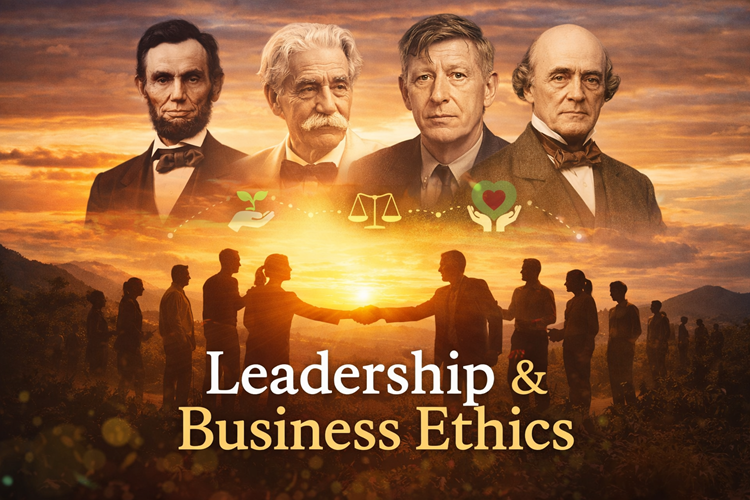
Abraham Lincoln, the 16th President of the United States, adeptly guided the nation through the tumultuous American Civil War, ensuring the preservation of the Union and the abolition of slavery. He once articulated his moral compass by stating, "When I do good, I feel good; when I do bad, I feel bad. That's my religion." What guiding principles shape your actions?
Albert Schweitzer, distinguished as a theologian, musician, philosopher, and physician, was honored with the Nobel Peace Prize for his "Reverence for Life" philosophy. He dedicated much of his life to developing a practical ethical philosophy for the betterment of society, firmly believing in humans' ethical obligation to assist, rather than harm, others.
Wystan Hugh Auden, celebrated as one of the 20th century's most eminent writers and poets, delved into themes of morality, love, politics, and citizenship in his works. He once remarked, "We are here on earth to do good for others. What the others are here for, I don't know," highlighting his commitment to altruism.
William Lloyd Garrison, a prominent American journalist, social reformer, and cofounder of the American Antislavery Society, also championed the women's suffrage movement. He asserted that the success of any significant moral endeavor is independent of sheer numbers.
In an ideal world, questions like "Did you lie, steal, or cheat?" would have straightforward answers. However, reality is often more complex. For instance, downloading free music from the internet initially deprives artists and distributors of income, but it could eventually boost sales through referrals. This scenario raises the question: does such downloading constitute stealing or cheating? From my perspective, as an author, I welcome people reading significant portions of my books for free online. In line with this, I have made substantial parts of my book available for complimentary downloads on various internet archives.
Another ethical dilemma to consider is the use of sports supplements. To what extent is their consumption ethical? If they are not legally prohibited, does that automatically render them ethically acceptable?
Black, White, and Gray
Right and wrong are often perceived as black and white, absolute, pure, and uncomplicated. However, our ethical system and behavior are influenced by many factors, such as cultural background, upbringing, education, ego, environment, circumstances, and associated stress. This intricate web of influences inevitably leads to the development of gray areas, those realms where explicit rulings or guidance are not readily available.
Seen from another perspective, there are various shades of black and white, akin to the experience of selecting different tones of black or white paint at a paint shop or choosing a black or white suit at a clothing store. It is essential to strive for ethical standards that surpass those of our peers and other organizations.
The image one projects is intricately linked to how one navigates these black, white, and gray areas. Keeping this in mind is crucial while continuously striving for ethical improvement.
Ego and Language
As adults, we often carry an ego and utilize our communication skills to justify our behavior, primarily focusing on achieving our goals. This innate selfishness, combined with influences from friends, family, and our environment, introduces numerous gray areas into our interactions and decision-making processes.
Business Ethics
In business, it is often perceived that the primary focus is on financial gain, rather than on other factors. This perspective aligns with the shareholder approach, which prioritizes the interests of stockholders, in contrast to the stakeholder approach, which considers the needs of a broader group, including employees, customers, suppliers, the government, and the environment.
When it comes to a potential sale, the question arises: is it incumbent upon the seller to disclose all significant details about the product or service in question? How should the seller respond to inquiries, should he or she provide precise answers to each question, or is it sufficient to address the general intent of the inquiries? Conversely, does the onus fall on the buyer to thoroughly investigate the advantages and disadvantages of their potential purchase through diligent research? These considerations represent a complex and ambiguous area in business ethics.
Good Faith
From an ethical standpoint, utmost good faith is paramount. It is essential that the contract accurately mirrors the spirit of the agreement; therefore, it should be revised to align with the originally agreed-upon terms, regardless of the absence of a legal mandate. Emphasizing a win-win scenario for all involved parties is key to ensuring profitable growth.
Right and Wrong: Myth or Reality?
Business decisions frequently involve complex scenarios that are not entirely ethical or unethical. As a result, making the right choice can be challenging, which contradicts the simplicity suggested by many philosophically based case studies. Moral values like respect, honesty, fairness, and responsibility should guide our ethical behavior. However, these values are often overlooked during times of stress and confusion when adhering to one's principles is most crucial. We will delve into this topic in more detail later on.
Dilemmas and Mazes of Fiction/Nonfiction
Business ethics revolves around navigating dilemmas that frequently lack a clear distinction between right and wrong.
Leaders often find themselves addressing potential conflicts of interest, improper utilization of resources, contract mismanagement, unfulfilled promises, and excessive demands on resources, including personnel.
Business Ethics and Leadership
Business ethics necessitates an awareness of social responsibility, which includes tackling societal issues like poverty, crime, environmental protection, equal rights, public health, and enhancing education. This is reflected in concepts such as stakeholder theory, the focus on public relations, improved human resource management, and others. Our concern centers around people, the planet, and how we generate profits.
Regrettably, many business schools offer training in business ethics, favoring a philosophical approach over a practical one. This approach requires reconsideration in light of real-world experiences. Regular and frequent oaths related to ethical compliance represent a step in the right direction. However, they are not a definitive guarantee of ethical behavior.
Ethics Management in the Workplace
Society. Improving society could lead to better working conditions, shorter working hours, better treatment of women, children, and employees with disabilities, antitrust laws, regulation of trade unions and business people, government intervention, a healthier environment, etc.
Ethics and turbulence. The focus on ethics deters people from straying, although it is difficult to alter the basic nature of selfish individuals consider Bernie Madoff, Conrad Black, and Vincent Lacroix.
Ethics, teamwork, and the bottom line. Constant communication and open discussions on ethics foster a bond between individuals keen on being ethical and help promote teamwork built on good spirits.
Emotional intelligence and ethics. Research confirms that emotionally intelligent people are often more ethical than others.
Ethics programs, costs, quality, and public image. Ethics management programs promote reduced costs related to hiring and firing and treatment of all stakeholders. Still, leaders must set an example by behaving ethically instead of merely preaching about ethics.
Ethics programs promote quality products, services, behavior, a diverse workforce, and fair treatment. Ethics programs also promote a strong public image via demonstrations of integrity and honor in preference to emphasizing the importance of money. Compare the way Johnson & Johnson handled the Tylenol crisis and how McCain dealt with the Maple Leaf Foods crisis with how:
(a) Exxon handled the oil spill in Alaska,
(b) BP handled the 2010 Gulf of Mexico Oil Spill, which was the worst in US history,
(c) Toyota handled problems related to their accelerator pedals, electronic systems, and other matters, and
(d) Prominent drug companies in the USA handled research and testing of their drugs on children and animals, marketing practices, overcharging, and false claims, which cost the US government and taxpayers considerable sums of money.
Benefits of ethics management programs. These benefits include more respect, better teamwork and motivation, and an improved bottom line based on morally sound behavior.
A less stressful life. A sound ethics management program normally results in more peace of mind and less overall stress.
Ethics Management Programs: An Overview
Business people need practical guidance on establishing, implementing, and observing an effective ethics management program consisting of policies and procedures based on group discussions to guide decisions and behavior. Employees should be involved in developing an ethics program, and in related training and evaluation, thereby encouraging adherence to the code of ethics.
As human beings, we all make mistakes, but hopefully they are not intentional or malicious; this is better than deliberately ignoring the code of ethics. One should help people recognize and address their mistakes while operating ethically.
Ethics Management: Roles, Responsibilities, and Implementation
The CEO should announce the program, champion its cause, and lead by example.
An ethics committee at the board level should develop and implement the ethics management program (EMP). The committee should be established to help in implementing the EMP, training and monitoring, and resolving ethical dilemmas.
An ethics officer should be appointed to monitor progress and resolve ethical problems/dilemmas.
An ombudsperson should be held responsible for ensuring strict adherence to ethical procedures, policies, and practices.
The Code of Ethics
Consider the following guidelines when developing a code of ethics from the Six Pillars of Character developed by The Josephson Institute of Ethics, USA:
- Trustworthiness: honesty, integrity, promise-keeping, loyalty
- Respect: autonomy, privacy, dignity, courtesy, tolerance, acceptance
- Responsibility: accountability, pursuit of excellence
- Caring: compassion, consideration, giving, sharing, kindness, loving
- Justice and fairness: procedural fairness, impartiality, consistency, equity, equality, due process
- Civic virtue and citizenship: law-abiding, community service, and environmental protection
An organization can be sued for breach of contract if its practices are not in accordance with its policies. Firms must review their policies at least once a year to ensure that they are in accordance with laws, regulations, and ethical “best practices.”
Topics typically addressed by codes of conduct include the dress code; avoiding drugs; being cooperative, reliable, and prompt; maintaining confidentiality; not accepting personal gifts from stakeholders as a result of employment; not discriminating; respecting the rights of other stakeholders; avoiding conflicts of interest; complying with laws; not using the firm’s property for personal use; and reporting illegal or questionable activity. Ethics goes far beyond the law.
To be continued…
Conlin Maxwell is a leadership and business ethics author whose work explores integrity, governance, and responsible decision-making in modern organizations. Drawing from historical insight and contemporary business realities, he examines how ethical leadership shapes culture, accountability, and long-term success.
In addition to his writing, Conlin provides small business consulting services in the Greater Toronto Area, advising entrepreneurs on financial responsibility, regulatory navigation, and structured reporting.
Learn more at https://leadershipandethicsguide.com or explore his published works on Amazon.
More by Colin Maxwell